Recently I read about the 36 questions, a psychological experiment developed by Arthur Aron, Ph.D. and Elaine Aron, Ph.D., designed to build emotional connections between two individuals who discuss the questions together. The theory behind these questions is based on the idea that self-disclosure can create feelings of closeness and intimacy between people.
I decided to have my students try these questions. That week, we were exploring the elements that make up human society. I was looking for a way to demonstrate the power of communication in terms of connection building. Having my students share these 36 questions with each other seemed like a good way to tackle this concept.
Step One: Edit the Questions
I began by vetting the questions. Some of them can be a little personal. Here are some examples that raised some red flags with me:
- What roles do love and affection play in your life?
- Complete this sentence: “I wish I had someone with whom I could share…”
I’ve taught for a long time and I knew that questions like these would trigger some outrageous responses and/or reactions.
I boiled down the original 36 to the following, more realistic, questions:
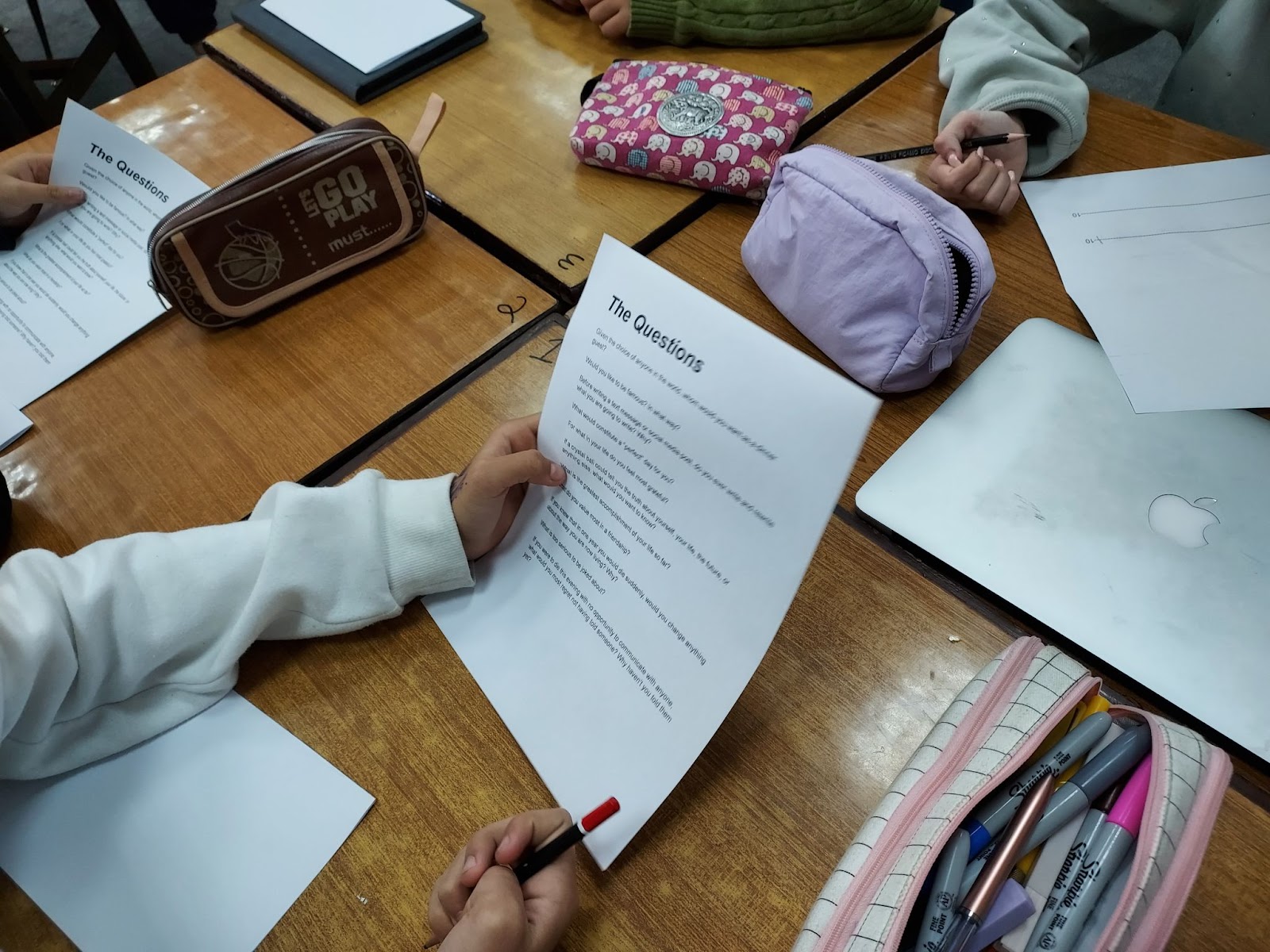
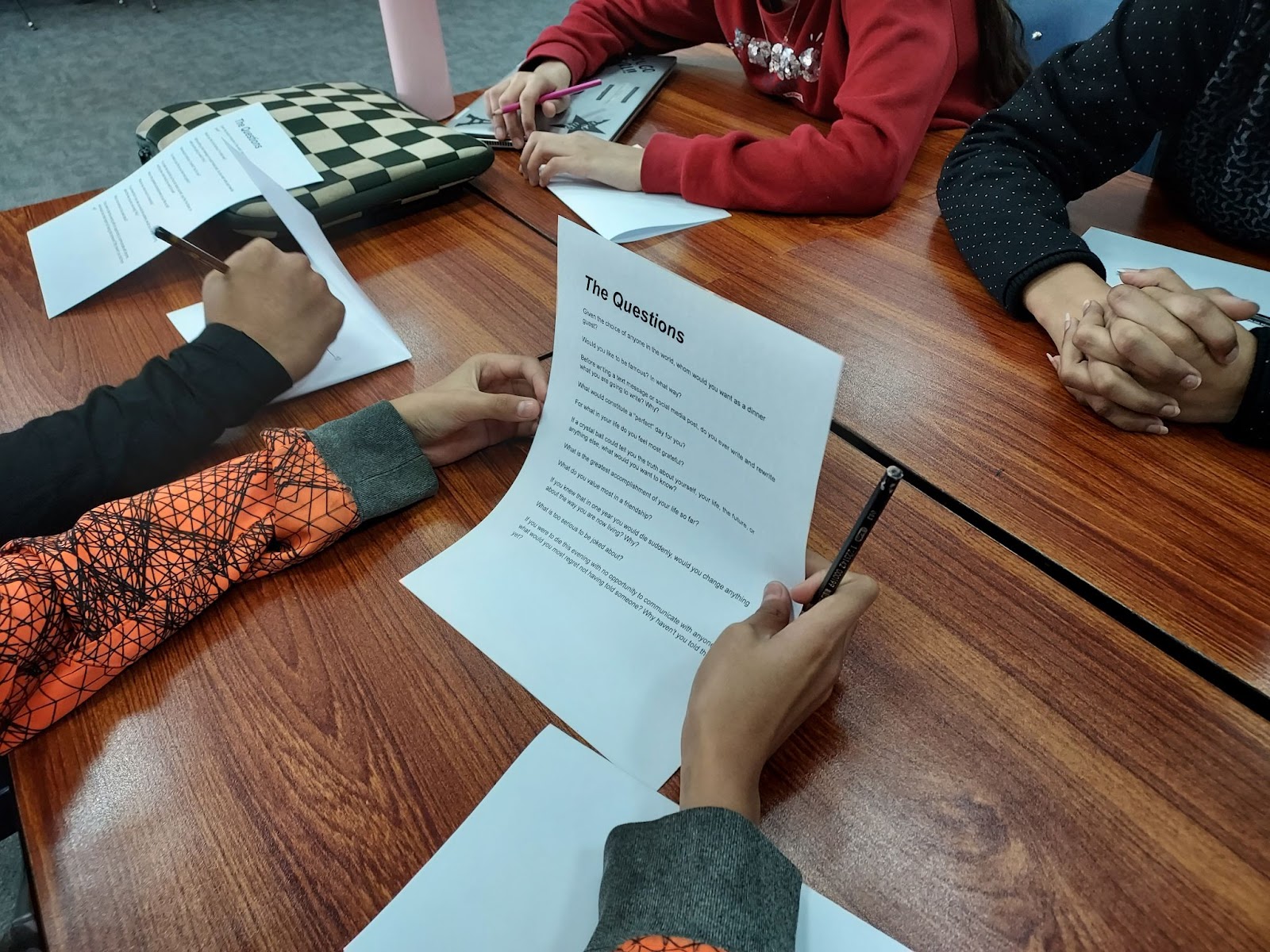
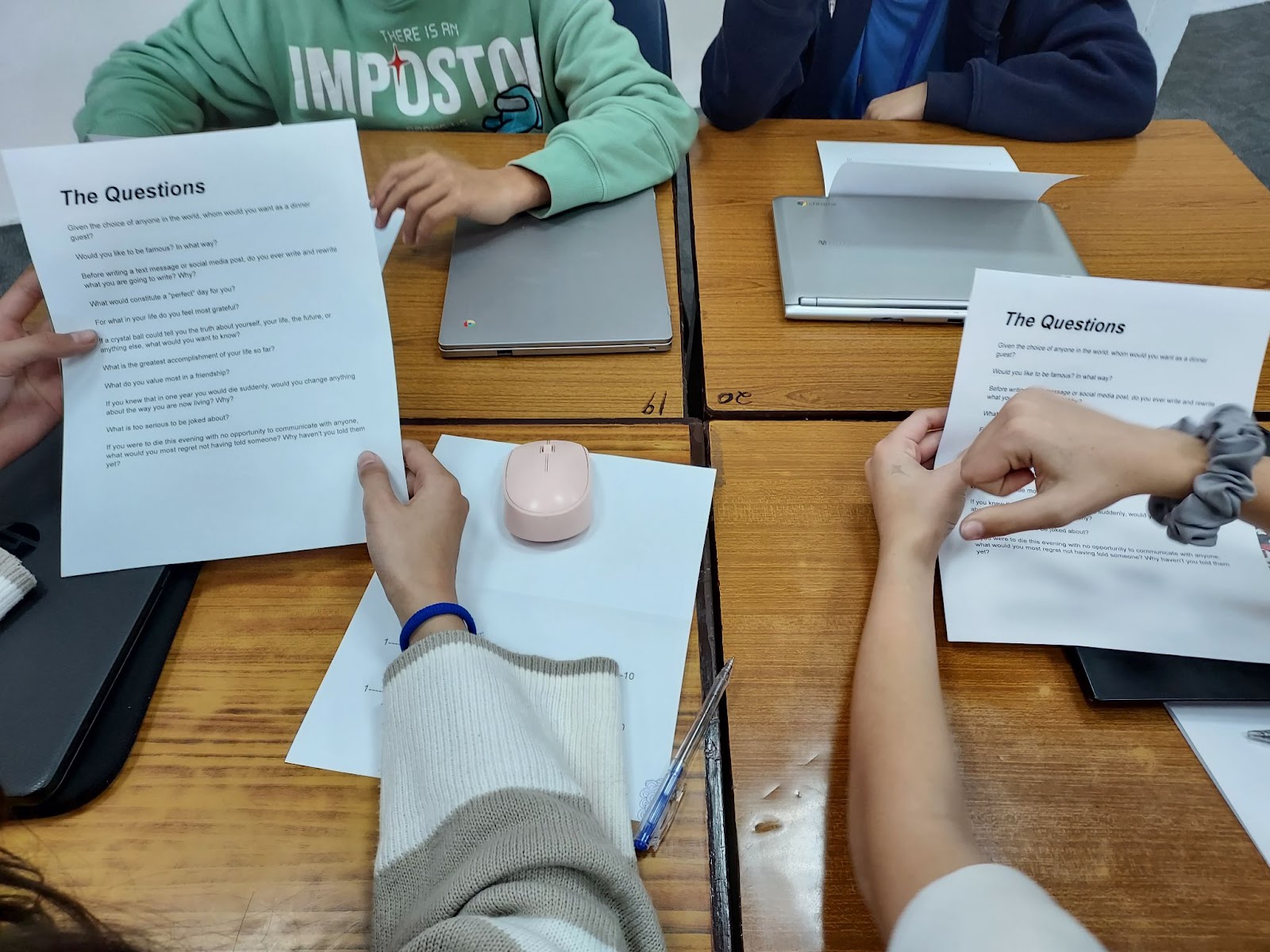
- Given the choice of anyone in the world, whom would you want as a dinner guest?
- Would you like to be famous? In what way?
- Before writing a text message or social media post, do you ever write and rewrite what you are going to write? Why?
- What would constitute a “perfect” day for you?
- For what in your life do you feel most grateful?
- If a crystal ball could tell you the truth about yourself, your life, the future, or anything else, what would you want to know?
- What is the greatest accomplishment of your life so far?
- What do you value most in a friendship?
- If you knew that in one year you would die suddenly, would you change anything about the way you are now living? Why?
- What is too serious to be joked about?
- If you were to die this evening with no opportunity to communicate with anyone, what would you most regret not having told someone? Why haven’t you told them yet?
Step Two: Create a Tracking Sheet
I created a document for the students to track data – not the answers to the above questions. Instead, I wanted each student to track their connection with the person they were partnered with. Before the question/answer session began, I had students determine – along a line numbered between 1 and 10 – their connection with this partner. Did they feel very close to this person? Or, did they only know them superficially?
Step Three: Let the Questioning Begin!
Students began the interview session. Only one person asked the questions. But, both students were encouraged to share responses.
Step Four: Final Evaluation
Once the questioning was completed, students were asked to reassess their connection with the person they were partnered with.
While some students felt that their connection with their partner had not been affected by the activity, many students admitted that the exchange of personal information had positively impacted the connection.
Step Five: Reflection
Afterwards, we sat together and talked about the experience. Students were able to see that their feelings of closeness were affected by the sharing of personal information. And, they were able to extend this understanding to our exploration of human society and the important role played by communication.
You are welcome to use my abridged list, but you might try a few of the original questions just to see what happens. Information about the questions and the people behind the experiment are readily available on Google.
Don’t tell students the point of the experiment before you conduct it. Students love to prove teachers wrong and will be tempted to skew the results. Some may even declare that the process actually diminished the connection with their partner! Just pass out the questions and the tracking sheet and see what happens.
If you do try this in your class, please remember to share your results!
Ed X!
 Educational Exploits